A good serum can only do so much.
You may cleanse, moisturize, and use sunscreen every day, yet your skin still looks dry, rough, or tired. Fine lines may stand out more when your skin lacks moisture, and makeup may settle into uneven areas instead of sitting smoothly.
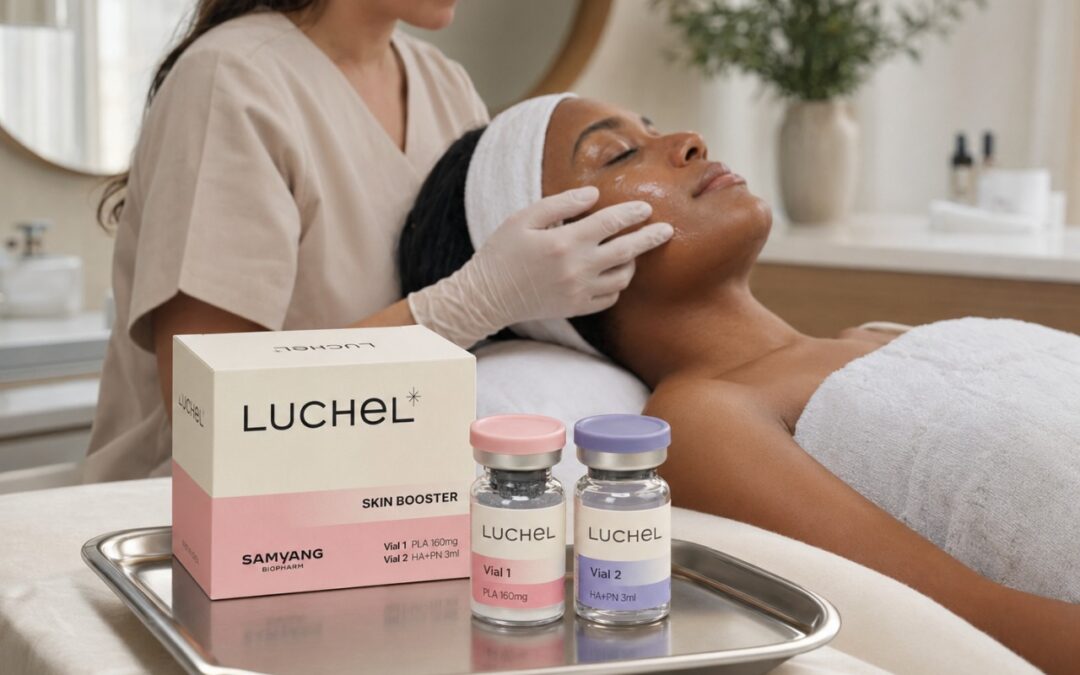
A professional skin booster can add a concentrated hydration step to your skin care plan. But you need to know what type of product you are getting. Some skin boosters are injected into the skin. Others, including Luchel Skin Booster from DongBang Medical USA, are made for topical application.
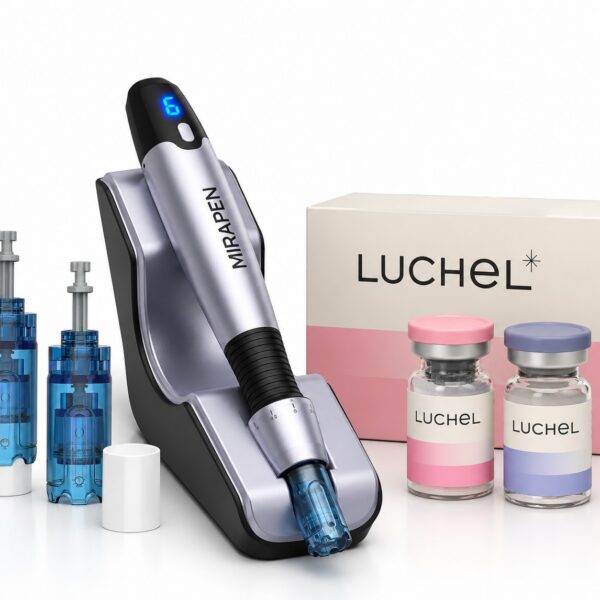
Luchel is a professional dual vial formula containing mPEG PDLLA, hyaluronic acid, polynucleotide, and proteoglycan. Providers mix it fresh before applying it to the skin.
This guide explains how topical skin boosters support skin hydration, what Luchel contains, how providers prepare it, and what results you can reasonably expect.
What You’ll Learn From This Article
This article will help you understand:
- What a skin booster is and how topical formulas differ from injectable treatments
- How hyaluronic acid supports skin hydration and a smoother appearance
- What mPEG PDLLA, polynucleotide, and proteoglycan do in Luchel’s formula
- Why Luchel uses a fresh mixed dual vial system
- How providers prepare and apply Luchel for topical use
- Which skin concerns may benefit from a professional hydration treatment
- What skin booster results clients can realistically expect
- Which safety, handling, and provider precautions matter most
- How medical spas can add Luchel to a professional skin care service
What Is a Skin Booster?

The phrase skin booster describes products intended to support visible skin quality. Depending on the formula, the treatment may focus on skin hydration, skin texture, softness, radiance, or the appearance of fine lines.
Skin boosters do not belong to one standard medical or cosmetic category. Different products contain different ingredients and use different application methods. Some are injectable medical products, while others are professional topical formulas.
That distinction affects everything from expected skin booster results to product handling and provider qualifications.
Topical Skin Boosters vs Injectable Skin Boosters
Injectable skin boosters are placed beneath the skin with a needle or cannula. A licensed medical professional may use them to improve skin quality, hydration, or other features of aging skin, depending on the approved product and its intended use.
Topical skin boosters stay on the skin surface. They may support a professional facial or hydration treatment, but they do not produce the same effect as an injection.
Luchel is not an injectable skin booster. Providers should apply it only as directed on intact skin. They should never use it as a skin booster injection, dermal filler, or injectable collagen stimulator.
Skin Boosters vs Serums, Fillers, and Biostimulators
A standard serum usually arrives ready to use and becomes part of a daily home skin care routine. A professional skin quality booster may contain concentrated ingredients, require preparation, or form part of an in-office treatment protocol.
Hyaluronic acid dermal filler injections serve a different purpose. Fillers add volume beneath the skin, support facial structure, or soften folds. Topical hyaluronic acid supports moisture at the skin surface and does not create the shape or volume associated with filler injections.
Injectable biostimulators are regulated separately and work by a different mechanism. Luchel is a fresh mixed topical product designed to support hydration and the cosmetic appearance of the skin.
How Topical Skin Boosters Support Skin Hydration
Healthy skin relies on an intact outer barrier. This barrier helps limit water loss and protects the skin from outside irritants. When the barrier becomes dry or disrupted, your skin may feel tight, look rough, or become more sensitive.
A topical skin booster can support the surface of the skin by supplying moisture-binding and conditioning ingredients.
Moisture Binding at the Skin Surface
Humectants attract and hold water. Hyaluronic acid is one of the best-known humectants used in professional and home skin care.
Research on topical hyaluronic acid formulas has reported improvements in skin hydration, smoothness, plumping, and the appearance of fine lines. Results vary by formula, molecular size, frequency of use, and the condition of the skin before treatment.
Better skin hydration can make the skin surface look softer and more reflective. This may create the appearance of glowing skin and reduce the way shallow dehydration lines catch the light.
Hydration does not permanently change skin structure. It also does not replace treatment for skin laxity, deeper wrinkles, volume loss, or medical skin concerns.
Supporting the Skin Barrier
The skin barrier slows water loss and helps the skin from irritants and environmental stressors. Dryness, harsh products, sun exposure, age, and some skin conditions can weaken this protective layer.
A hydration-focused treatment may complement:
- A gentle cleanser
- A suitable moisturizer
- Daily broad-spectrum sunscreen
- A simple home skin care plan
- Professional assessment of the client’s skin type
Providers should not use a topical skin booster to treat eczema, rosacea, acne, infection, or another diagnosed condition. Those concerns may need medical assessment and a separate treatment plan.
Why Professional Application Matters
Professional application gives the provider a chance to assess the skin before using the product. The provider can check for active irritation, open areas, recent procedures, or signs that treatment should wait.
Clean handling also matters. A fresh mixed formula requires careful preparation to reduce contamination and preserve product quality.
The provider should follow the Luchel directions for storage, mixing, quantity, and topical application. A clinic should also document the product lot number and the client’s response.
Why Luchel Uses a Dual Vial System
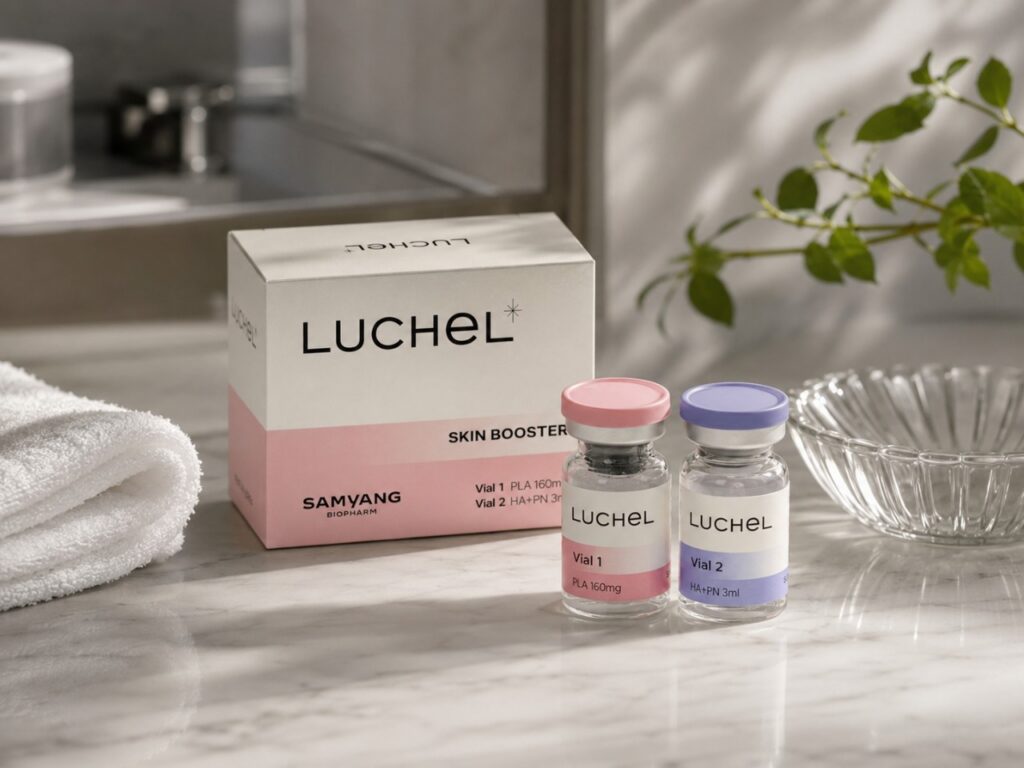
Luchel keeps its powder and liquid components separate until the treatment begins. The provider mixes both vials by hand immediately before topical use.
This format allows the clinic to prepare the complete formula at the point of care.
Vial 1 Contains Fully Solubilized mPEG PDLLA
Vial 1 contains 160 mg of mPEG PDLLA.
PDLLA means Poly D, L-Lactic Acid. It is a biodegradable polymer used in several medical material applications. The mPEG component is hydrophilic, which means it interacts with water and helps the formula disperse evenly.
Luchel contains a fully solubilized PDLLA component rather than suspended solid particles. This can support a more even topical mixture after the provider combines both vials.
Do not confuse topical mPEG PDLLA with injectable PDLLA products. Luchel is not designed for injection or implantation.
Vial 2 Contains HA, PN, and Proteoglycan
Vial 2 contains a 3 mL liquid base with:
- Hyaluronic acid
- Polynucleotide
- Proteoglycan
The liquid vial supplies the moisture-binding and conditioning portion of the formula. The provider pours the full contents of Vial 2 into Vial 1 before use.
The complete product forms only after the two components are mixed.
Luchel Can Be Mixed in Under Five Minutes
The provider can mix Luchel by hand without specialized mixing equipment.
The process involves removing both stoppers, pouring Vial 2 into Vial 1, replacing the stopper, and gently mixing the formula until it appears fully combined.
Fast preparation may help clinics add the treatment to an existing professional facial service. Still, speed should never replace careful hygiene or correct handling.
Key Luchel Ingredients and Their Cosmetic Roles
Each ingredient serves a different role in the complete topical formula.
| Ingredient | Role in the Formula | Cosmetic Purpose | Important Consideration |
|---|---|---|---|
| mPEG PDLLA | Solubilized polymer component | Supports even formula dispersion | Topical use only |
| Hyaluronic acid | Moisture-binding ingredient | Supports skin hydration and softness | Does not act like an injectable filler |
| Polynucleotide | Professional skin conditioning ingredient | Supports the cosmetic appearance of skin | Topical claims should not rely on injection studies |
| Proteoglycan | Moisture-related conditioning component | Supports softness and surface quality | Results depend on the full formula |
Hyaluronic Acid for Skin Hydration
Hyaluronic acid attracts water and helps maintain a hydrated skin surface. It appears in cleansers, creams, serums, masks, and professional skin rejuvenation treatments.
Topical HA may support:
- Increased skin hydration
- Softer skin texture
- A smoother-looking surface
- Improved suppleness
- Less noticeable dehydration lines
Polynucleotide in Professional Skin Care
Polynucleotides are chains of nucleotides. They appear in a growing number of aesthetic products marketed for skin rejuvenation and skin quality.
Most published research focuses on polynucleotide injections, not topical skincare. Reviews of injectable PN treatments report possible benefits for skin texture, elasticity, and wrinkle appearance, but study quality and protocols vary.
Providers should not apply injectable findings directly to Luchel. In this topical formula, PN should be described as a skin conditioning ingredient. It should not be promoted as rebuilding tissue, healing wounds, or producing new collagen unless product-specific evidence supports those claims.
Proteoglycan for Skin Conditioning
Proteoglycans form part of the natural extracellular environment around cells. Their structure allows them to interact with water and other components in tissue.
In a cosmetic product, proteoglycan may support skin conditioning, moisture-related properties, and a softer skin surface. Its presence alone does not prove collagen and elastin production or permanent changes in skin thickness.
The complete formula, concentration, application method, and condition of the skin all affect the result.
mPEG PDLLA as a Solubilized Polymer
Luchel’s mPEG PDLLA dissolves into the freshly mixed liquid formula. It does not remain as a visible particle suspension.
Even dispersion can help the provider spread the product consistently across the treatment area. This supports controlled topical use.
Again, this ingredient should not be presented as an injectable biostimulator. Luchel remains topical before, during, and after preparation.
How to Prepare and Apply Luchel
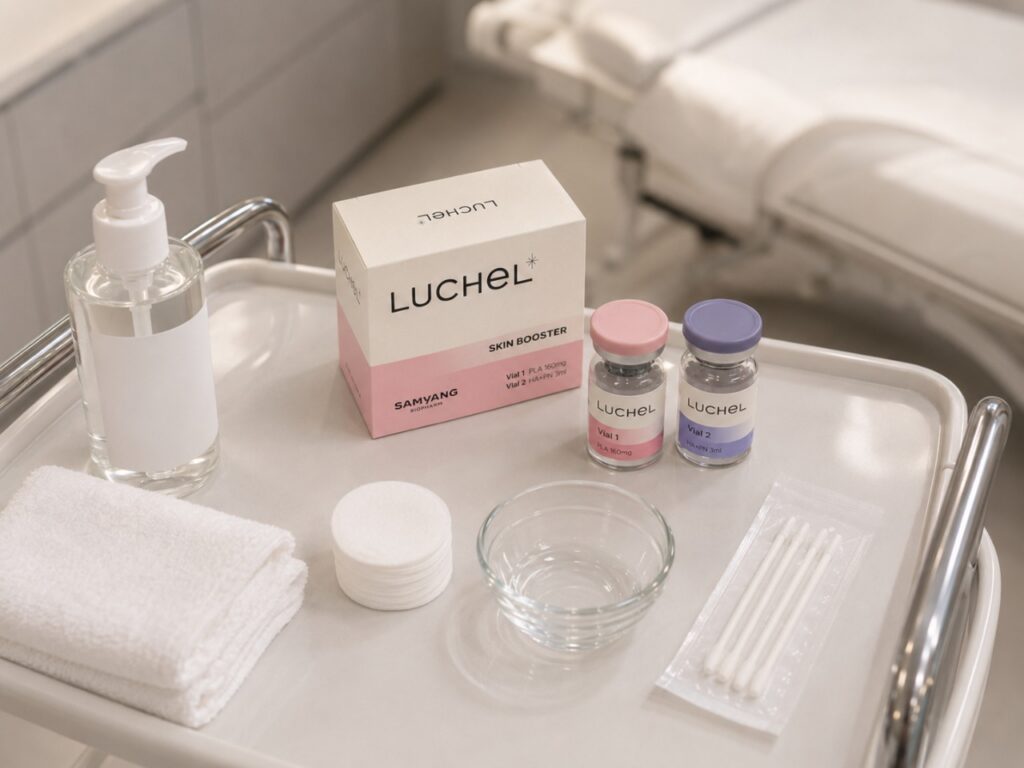
Correct preparation starts before either vial is opened. The provider should assess the client, inspect the treatment area, and confirm that the packaging is intact.
The clinic should also follow the manufacturer’s directions and its own written hygiene protocol.
Prepare the Client’s Skin
Cleanse the treatment area thoroughly. Remove makeup, sunscreen, oil, and surface debris.
Review the client’s recent procedures, allergies, known sensitivities, and current skin concerns. Delay treatment when the skin shows active inflammation, infection, open wounds, or incomplete healing.
A provider should refer unexplained rashes, persistent irritation, or suspicious skin changes for medical assessment.
Mix the Two Vials
Follow these steps:
- Remove the caps and rubber stoppers from Vial 1 and Vial 2.
- Pour the entire contents of Vial 2 into Vial 1.
- Replace the stopper securely on Vial 1.
- Mix gently until the formula appears fully combined.
- Avoid touching the vial openings or other areas that may contaminate the product.
Prepare the formula only when the client and treatment area are ready.
Apply Luchel Topically
Apply an appropriate amount of the mixed formula to the skin. Allow it to settle and absorb according to the product instructions.
Do not inject Luchel. Do not place it under the skin with a needle or cannula. Do not alter the intended route based on skin trends, overseas demonstrations, or social media content.
The FDA determines product classification partly through intended use and marketing claims. Cosmetic claims should focus on cleansing, beautifying, or altering appearance rather than treating disease or changing body structure.
Use Caution With Microneedling
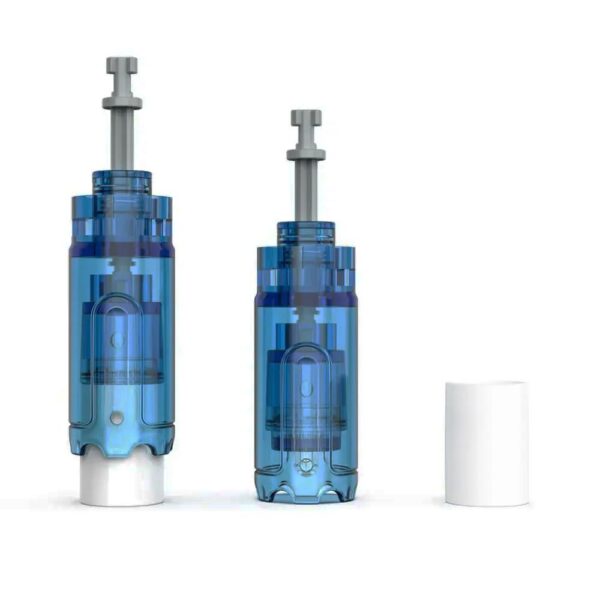
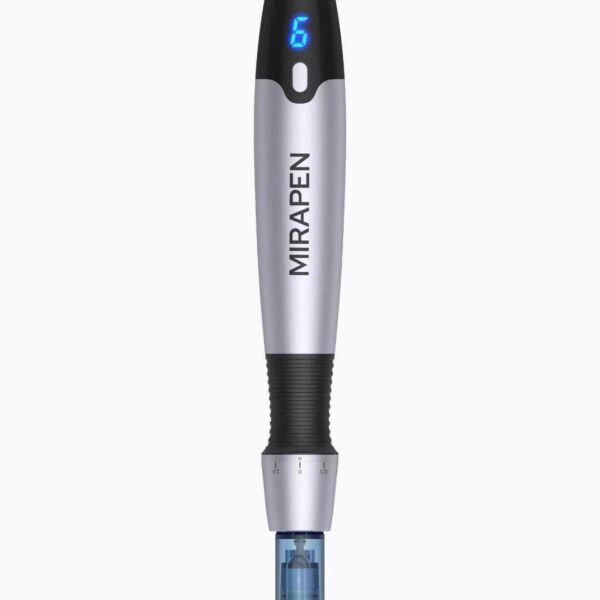
Microneedling creates small channels in the skin. It is not the same as simple topical application.
The FDA states that cleared microneedling devices are not authorized to deliver cosmetics, creams, gels, vitamins, drugs, or blood products into the skin.
Do not assume that Luchel can be pushed through microneedling channels. Clinics should follow the labeling for the device and the product, state scope rules, and seek advice from a qualified regulatory professional.
Who May Benefit From a Topical Skin Booster?
A topical skin booster may suit someone whose main skin goals involve hydration, softness, or a more refreshed appearance.
The client’s skin type, current routine, treatment history, and expectations should guide the decision.
Clients With Dry or Rough-Looking Skin
Luchel may appeal to clients who notice:
- Persistent surface dryness
- A tight skin feel
- Rough skin texture
- Reduced suppleness
- A dull appearance linked to low moisture
Dry skin can make fine lines and skin surface roughness look more obvious. A hydration-focused service may help soften that appearance.
Clients Seeking Radiant Skin
Some clients want glowing skin before an event or as part of routine professional care. They may not have a medical skin condition. Their main concern is that their facial skin looks flat, tired, or uneven.
A topical treatment can support skin hydration without an injection. The result may look subtle, which is often exactly what the client wants.
Clients Who Prefer Non-Injectable Care
Not every client wants skin booster injections, fillers, or other injectable skin rejuvenation treatments.
A topical option may suit someone who:
- Is not ready for injections
- Wants a low-disruption treatment
- Prefers hydration-focused skin care
- Wants to add a professional service to an existing routine
Providers should explain that topical and injectable skin boosters do not produce equal results.
Clinics Adding a Professional Hydration Service
Medical spas may use Luchel as part of a standalone hydration service or professional facial protocol.
The dual vial system gives the provider a fresh mixed formula without the need for specialized equipment. Clinics still need staff training, treatment records, client screening, storage controls, and reaction reporting.
What Skin Booster Results Can You Expect?
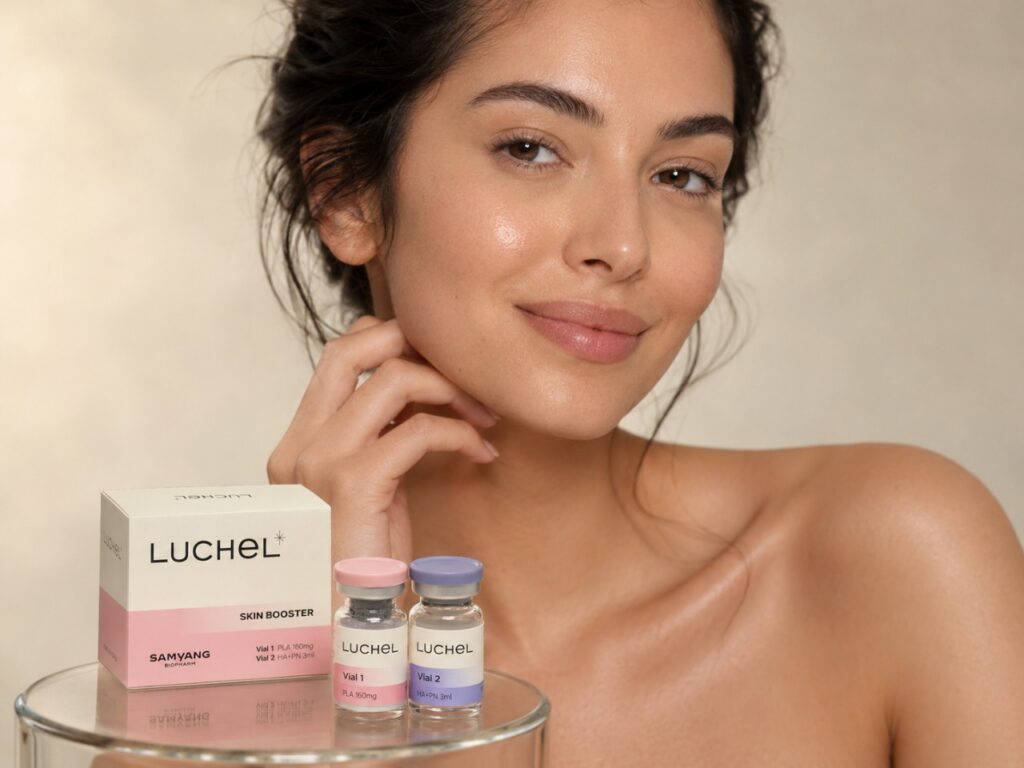
Results depend on the product and how it is used. Injectable skin boosters can affect deeper layers because providers place them beneath the skin. A topical skin booster mainly supports the skin surface.
Luchel should be presented with realistic cosmetic expectations.
Immediate Cosmetic Effects
After application, the skin may:
- Feel softer
- Look more hydrated
- Appear smoother
- Reflect light more evenly
- Have a fresher finish
These changes may be more noticeable when dehydration contributes to the client’s skin concerns.
Results After Repeated Treatments
Consistent professional care may support ongoing hydration and skin conditioning. The client may notice improved skin texture or a brighter appearance over time.
The best results usually depend on more than one clinic treatment. Daily sunscreen, gentle cleansing, moisturizer, and sensible product use also matter.
There is not enough published product-specific evidence to promise a fixed number of sessions, significant improvements in skin elasticity, or a precise period during which Luchel results will last.
What Luchel Does Not Do
Luchel does not:
- Replace dermal filler injections
- Restore major facial volume
- Act as an injectable collagen stimulator
- Treat skin laxity
- Cure acne, eczema, rosacea, or infection
- Diagnose or prevent disease
- Guarantee collagen and elastin production
Factors That Affect Results
Results may change based on:
- Baseline skin hydration
- Age and skin aging
- Skin barrier condition
- Skin type
- Treatment frequency
- Amount applied
- Home skin care
- Sun exposure
- Climate
- Individual sensitivity
No two clients have identical skin physiology, so results will differ.
Safety, Skin Testing, and Professional Precautions
A professional topical formula can still cause a reaction. Providers should screen clients, handle the product carefully, and document the treatment.
Safety also depends on using the product only by its intended route.
Luchel Skin Irritation Patch Test
According to the supplied product information, Luchel completed a primary skin irritation patch test at KC Skin Research Center Co., Ltd.
The test took place from December 11 to December 13, 2024, and included 33 subjects. The tested formula was evaluated as non-irritating.
This result does not guarantee that every client will tolerate the product. One person may still react to an ingredient that others tolerate well.
Possible Temporary Skin Responses
Clients may experience:
- Mild redness
- Temporary sensitivity
- Tightness
- Dryness
- Itching
- Local irritation
A reaction may also result from another product used during the appointment, recent exfoliation, or an unrelated skin condition.
When Treatment Should Wait
Delay treatment when the client has:
- Open wounds
- Active infection
- Significant redness
- Active dermatitis
- An unexplained rash
- Recent skin procedures that have not healed
- A known sensitivity to an ingredient
Refer the client for medical care when symptoms suggest a condition that needs diagnosis or treatment.
Safe Product Handling
Inspect the packaging, lot number, and expiration date before use. Follow the stated storage conditions.
Do not use a vial when:
- The packaging is damaged
- The seal appears broken
- The product has expired
- The storage history is unknown
- The formula looks different from the expected appearance
Record the product lot and report unexpected reactions through the proper clinic and supplier channels.
How Luchel Fits Into a Medical Spa Treatment Program
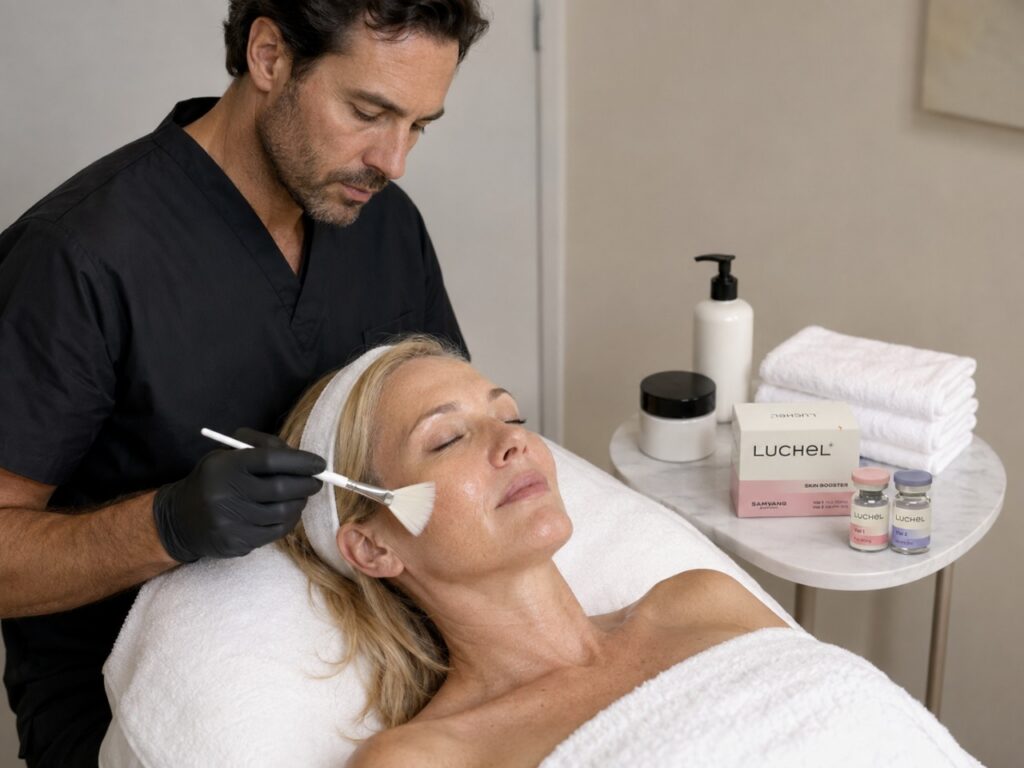
Luchel can support a professional service menu when the clinic presents it accurately and uses it consistently.
The treatment should focus on cosmetic hydration and skin conditioning.
Standalone Hydration Treatment
A clinic may build a simple service around cleansing, Luchel preparation, topical application, and suitable aftercare.
The provider should explain what the treatment may improve and what it cannot change. This helps the client set sensible skin goals.
Complement to a Professional Facial
Luchel may fit into a gentle hydration focused facial. Providers should avoid combining too many strong exfoliants, acids, or irritating products in one session.
More products do not always mean better skin. Sometimes a simpler protocol is easier for the skin to tolerate.
Home Skin Care After Treatment
Encourage clients to use:
- A gentle cleanser
- A moisturizer suited to their skin type
- Broad-spectrum sunscreen
- Simple products that do not irritate the skin
Ask clients to pause strong exfoliants when their skin feels sensitive. They should contact the clinic when redness, itching, swelling, or discomfort persists.
Choosing a Skin Booster Supplier in the USA
Product sourcing affects authenticity, traceability, storage, and support. Clinics should purchase professional products through a clear and documented supply chain.
Price alone should not guide the decision.
Confirm Authenticity and Traceability
Check for:
- Authorized U.S. distribution
- Batch and lot numbers
- Clear expiration dates
- Intact packaging
- Storage instructions
- Supplier contact information
Avoid products from unknown online sellers or sources that cannot provide traceable documentation.
Confirm the Intended Use
The clinic should know whether a product is topical, injectable, prescription-based, or connected to a regulated device.
Every staff member handling Luchel should understand one point clearly:
Luchel is intended for topical application only.
Understand Quality and Regulatory Terms
KGMP, ISO certification, CE marking, and FDA requirements refer to different systems. One does not automatically replace another.
Train the Team
Create a written protocol covering:
- Client consultation
- Contraindications
- Product storage
- Mixing
- Topical application
- Aftercare
- Documentation
- Adverse reaction reporting
Clear training protects both the client and the clinic.
Frequently Asked Questions About Luchel Skin Booster
1. What Is Luchel Skin Booster?
Luchel is a professional dual vial topical skin booster containing mPEG PDLLA, hyaluronic acid, polynucleotide, and proteoglycan.
2. Is Luchel an Injectable Skin Booster?
No. Luchel is intended for topical application only. It should never be injected.
3. How Long Does Luchel Take to Mix?
A provider can mix the two vials manually in under five minutes. No specialized mixing machine is required.
4. What Are the Benefits of Luchel Skin Booster?
Luchel may support skin hydration, softness, smoothness, and a more refreshed appearance. Individual results vary.
5. Can Luchel Improve Skin Elasticity?
Hydrated skin may look more supple, but Luchel should not be promoted as permanently changing skin elasticity or collagen production without product-specific clinical evidence.
6. How Long Do Skin Booster Results Last?
The duration of topical skin booster results depends on the client’s skin, climate, home routine, treatment frequency, and other factors. No fixed duration can be guaranteed.
Professional Hydration Starts With the Right Skin Booster
Skin boosters come in many forms. Some are injectable, some act as fillers or biostimulators, and others focus on topical skin hydration. Knowing the difference helps you choose a treatment that matches your skin goals.
Luchel offers a professional topical option for clients who want softer, smoother, more radiant skin without an injection. Its dual vial format combines fully solubilized mPEG PDLLA with a liquid base containing hyaluronic acid, polynucleotide, and proteoglycan.
Providers mix the formula fresh at the point of use. No specialized mixing equipment or injectable placement is required.
DongBang Medical USA supplies Luchel for professional aesthetic settings in the United States. Clinics can contact DongBang Medical USA for product details, purchasing information, storage guidance, and availability.